
Gadelius Supplies Brokk 500 for First Tunnel Deployment in Japan
Jun. 08, 2026
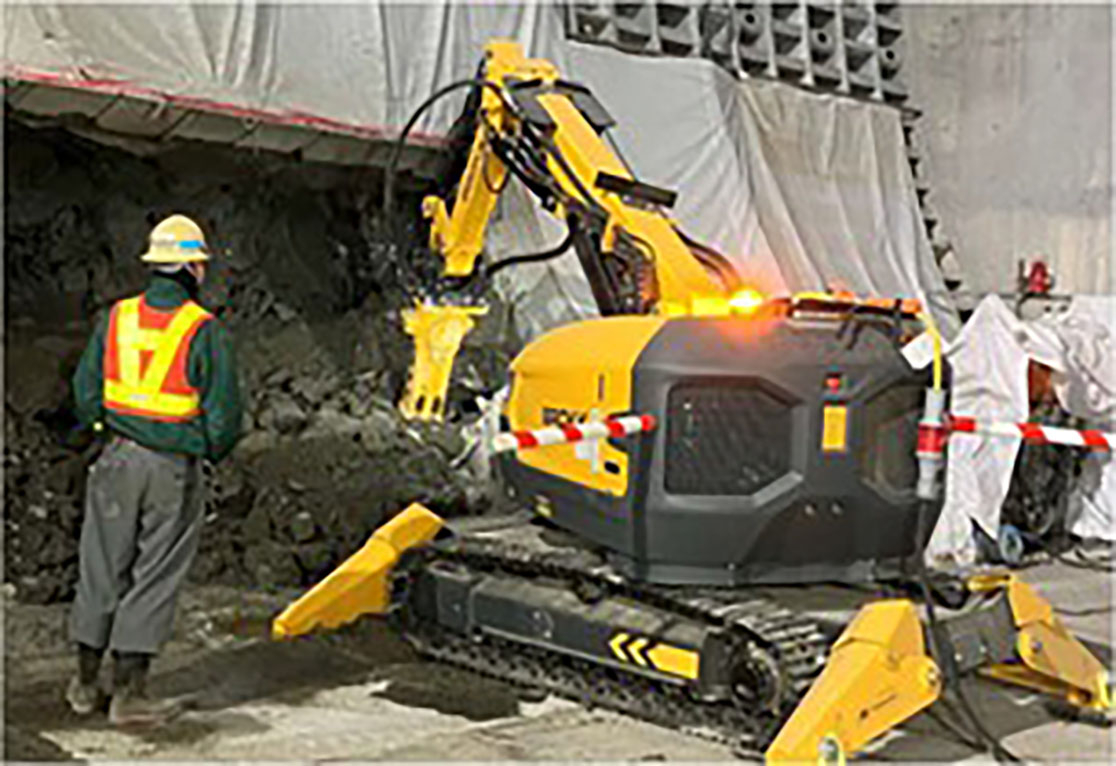
Tokyo, Japan -- Gadelius K.K., the exclusive distributor in Japan for Brokk, the world's leading manufacturer of remote-controlled demolition robots, has supplied the Brokk 500, a remote-controlled demolition and construction robot, to a tunnel construction project in Japan carried out by Nishimatsu Construction Co., Ltd.
This marks the first application of a remote-controlled demolition and construction robot in a tunnel project in Japan.
The BROKK® series consists of remote-controlled demolition and construction robots equipped with interchangeable attachments, enabling a single machine to perform multiple types of operations.
The Brokk 500, the second-largest model in the series, can handle key tunnel construction processes--including excavation, mucking, and shotcrete application--using one base unit.
For this project, a fully electric model was selected to meet environmental requirements within the tunnel. In addition, remote operation enables work in confined spaces, improving both worker safety and operational efficiency. These features are expected to deliver significant benefits, including reduced CO₂ emissions, enhanced safety, and shorter construction schedules.
About the BROKK® Series
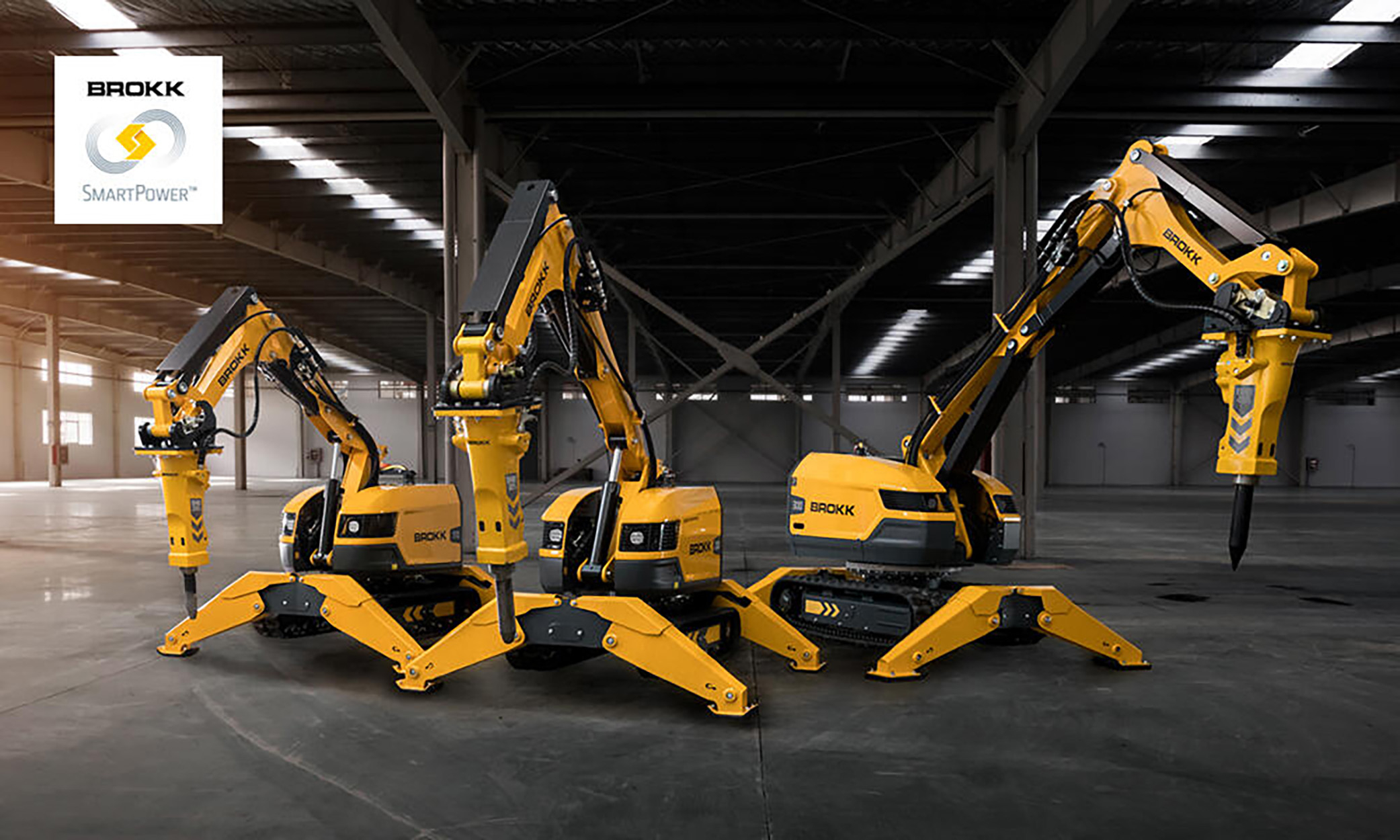
The BROKK® series, manufactured by Brokk AB in Sweden, consists of versatile remote-controlled demolition and construction robots used across a wide range of industries.
Equipped with a variety of attachments, the machines enable flexible operation while allowing operators to remain at a safe distance. The three-section arm design provides a wide working range and high maneuverability, while the electric drive system contributes to cleaner jobsite environments by eliminating exhaust emissions.
Project Background
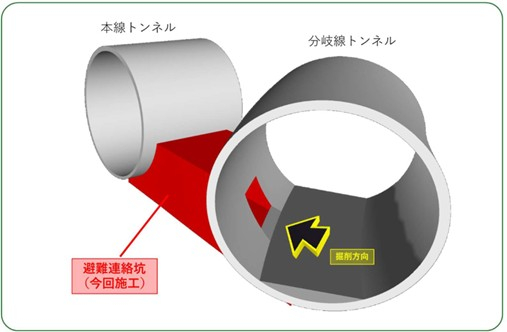
The robot was deployed under challenging conditions in the construction of a connecting tunnel located between a mainline tunnel and a branch tunnel extending from a shaft used for shield machine launch.
Due to limitations related to segment removal and excavation cross-section geometry, conventional large-scale tunneling equipment could not be used in this section.
To address these challenges, Gadelius supplied the Brokk 500, enabling both compact machine operation and high performance. This contributed to improved construction cycles and enhanced productivity on site.
Construction Using the Brokk 500
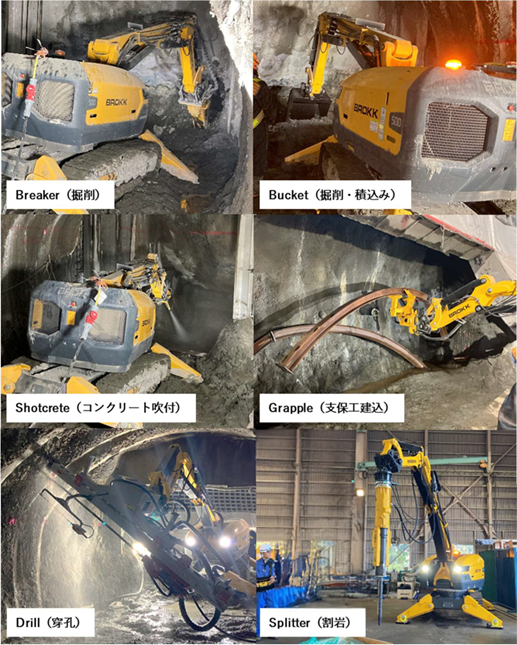
The Brokk 500, the second-largest model in the BROKK® series, is equipped with a lineup of six types of attachments designed specifically for tunnel construction.
At this site, a series of tunnel excavation operations (NATM/mechanical excavation) were carried out using a single base machine by switching attachments. These included excavation, mucking (loading), shotcrete application, installation of steel supports, and rock bolting. Each attachment was evaluated during the project.
Expected Benefits
The introduction of the Brokk 500 is expected to deliver the following benefits:
• Improved workability through a compact machine design
• Approximately 33% reduction in CO₂ emissions compared to conventional methods
• Shorter cycle times through reduced machine changeover
• Enhanced safety through remote operation
In this project, a breaker attachment significantly larger than typically compatible with the base machine (approximately 700 kg class) was successfully utilized.
Various attachments were also applied across different operations, with validation conducted for potential broader use in future tunnel projects.
About Gadelius K.K.
Gadelius K.K. is a Japan-based trading company specializing in the introduction and distribution of advanced industrial technologies.
Working closely with international manufacturers and domestic customers, the company facilitates the adoption of innovative solutions that contribute to improved safety, operational efficiency, and reduced environmental impact across a range of industries.
Forward-Looking Statement
Gadelius K.K. will continue to support the introduction of electric machinery and remote-control technologies, contributing to improved safety and operational efficiency in the construction industry, while promoting initiatives that help address labor constraints and reduce environmental impact at construction sites.